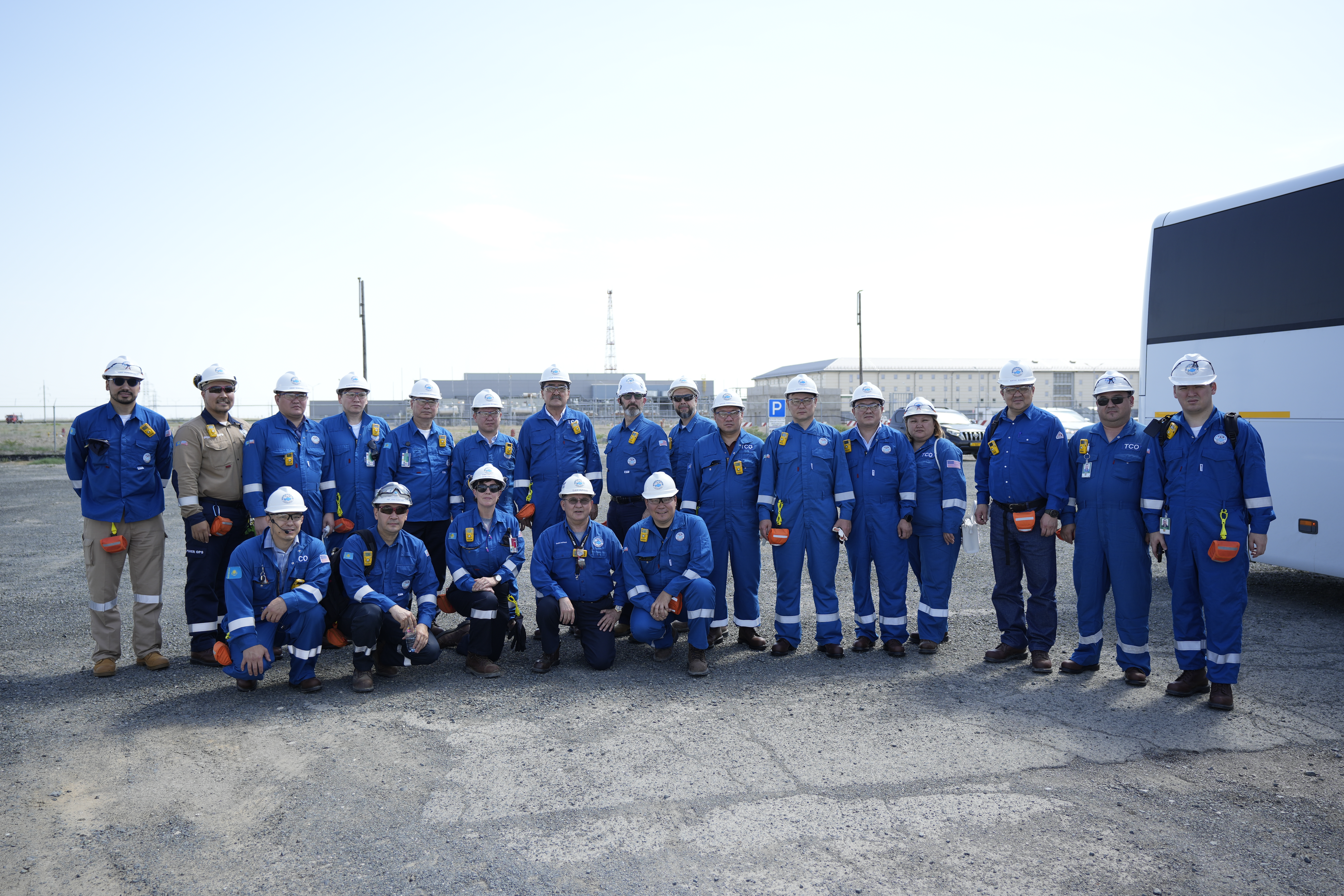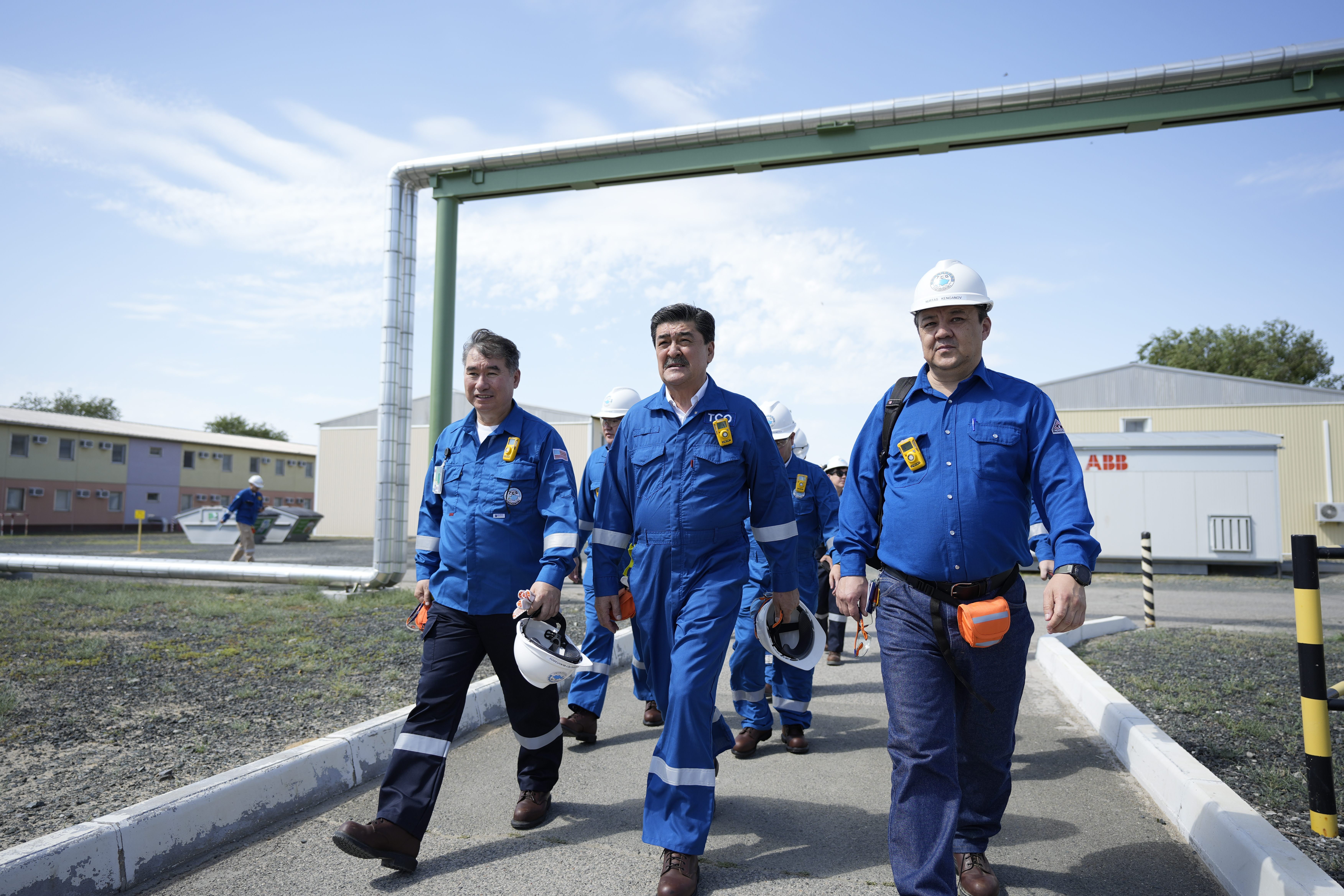
As part of an official visit to Atyrau Region, the Tengiz Field welcomed Yerlan Nyssanbayev, Minister of Ecology and Natural Resources of the Republic of Kazakhstan, along with representatives of the Atyrau Regional Akimat.
During the visit, the delegation was introduced to Tengizchevroil’ s (TCO) ongoing programs aimed at enhancing the environmental performance of its operations.
“Tengizchevroil places a strong emphasis on environmental protection. We appreciate TCO’s contribution, as it was one of the first international companies to enter Kazakhstan’s oil and gas sector and introduce high environmental standards”, said Yerlan Nyssanbayev, Minister of Ecology and Natural Resources of the Republic of Kazakhstan.
The visit program included a field tour of TCO’s operational facilities. Delegates were briefed on production activities at the Tengiz Field, environmental monitoring and control systems currently in place, and visited the company’s Water Reuse Facilities (WRF) and Wastewater Treatment Plant (WWTP).
TCO General Director William Lacobie emphasized that environmental stewardship remains one of the company’s highest priorities.
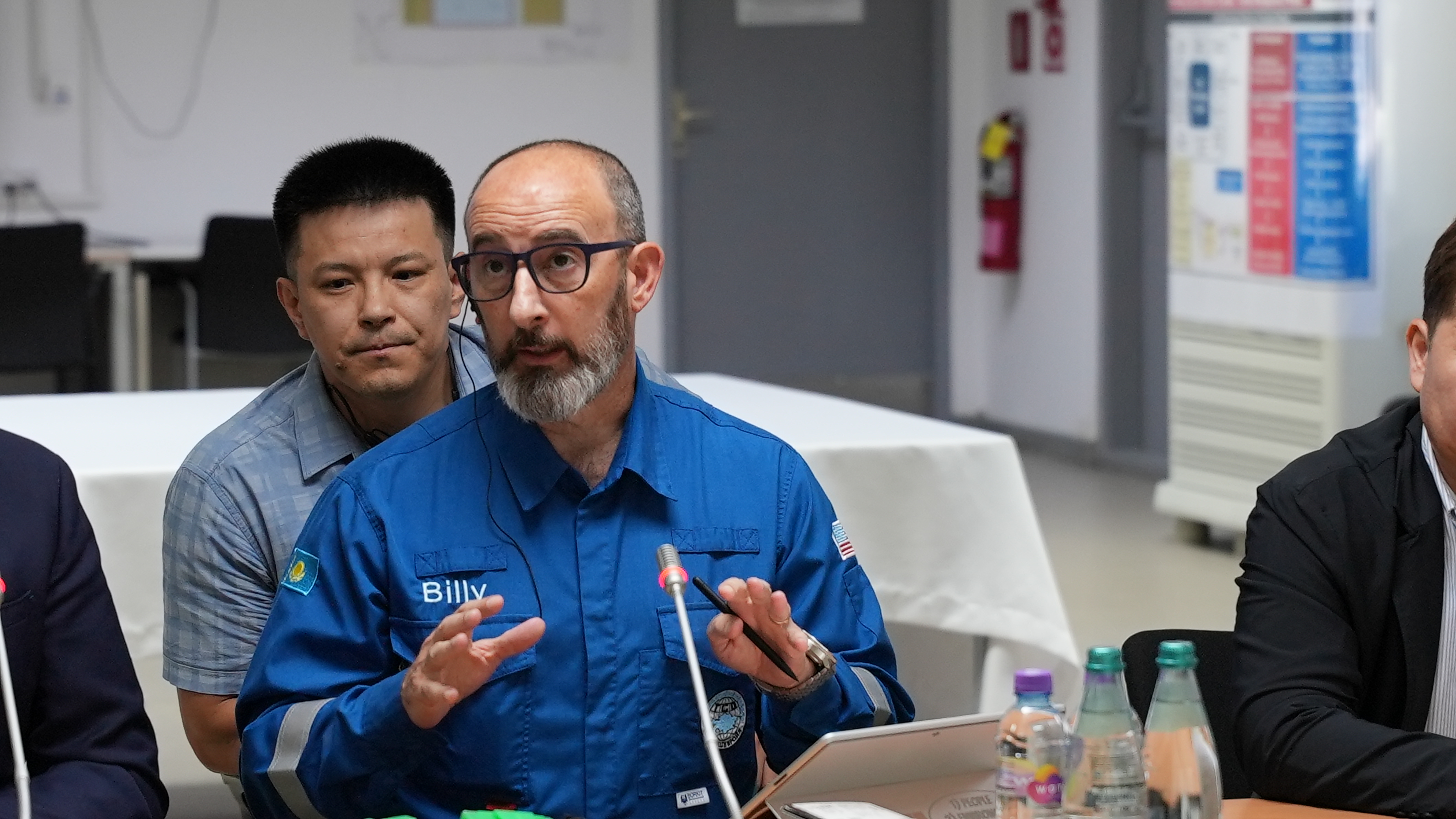
“At Tengizchevroil, environmental protection is an integral part of the way we operate and a key element of our sustainable development strategy. For many years, TCO has consistently invested substantial resources in environmental projects, monitoring programs, and initiatives to improve operational efficiency. These efforts have delivered tangible results in reducing emissions, promoting the responsible use of natural resources, and strengthening waste management practices,” said William Lacobie, TCO General Director.
TCO continues to implement a comprehensive environmental protection and sustainable development program. Since 2000, air emissions per tonne of oil produced have been reduced by 78 percent, reflecting TCO’s ongoing commitment to improving the environmental performance of its operations.
Mr. Nyssanbayev paid particular attention to TCO’s water resource management strategy. The delegation was introduced to the operations of the Wastewater Treatment Plant (WWTP) and Water Reuse Facilities (WRF), which are key elements of this strategy. Even as production has increased, the company has reduced its reliance on external water sources by investing in its own water infrastructure. Today, approximately 50 percent of the water used at the Tengiz operations is returned to the production cycle through reuse. Treated wastewater undergoes a multi-stage treatment process, including reverse osmosis, and is upgraded to industrial water standards before being reused in operational processes. TCO also promotes a culture of responsible water use among its workforce and business partners.
Another important step toward greater transparency in environmental oversight has been the implementation of the Automated Environmental Emissions Monitoring System (AEMS). TCO has fulfilled its commitments related to the deployment of this system across its production facilities and provides environmental data to government platforms in real time.
The company continues to maintain the system through ongoing technical support, equipment servicing and calibration, software optimization, and continuous data monitoring to ensure the reliable and timely transmission of information.
TCO is also advancing its waste management efforts. Today, the company sends more than 30 types of waste for recycling, with recycled waste accounting for 35 percent of the total waste generated in the first quarter of 2026.
At the conclusion of the visit, Mr. Nyssanbayev noted the importance of TCO’s efforts to improve the environmental performance of its operations and implement modern environmental protection solutions. Company representatives emphasized that the visit provided an opportunity to demonstrate the results of many years of investment in environmental programs, advanced monitoring technologies, and sustainable development initiatives.